
The Dock that Divided Neighbors:
A Conflict of Deeds, Riparian Rights, and the Parol Evidence Rule
This case study examines a waterfront dispute in Orlando, Florida, where conflicting deed interpretations and riparian rights led to a legal battle between neighboring property owners.
The Catalyst: A Waterfront Dream
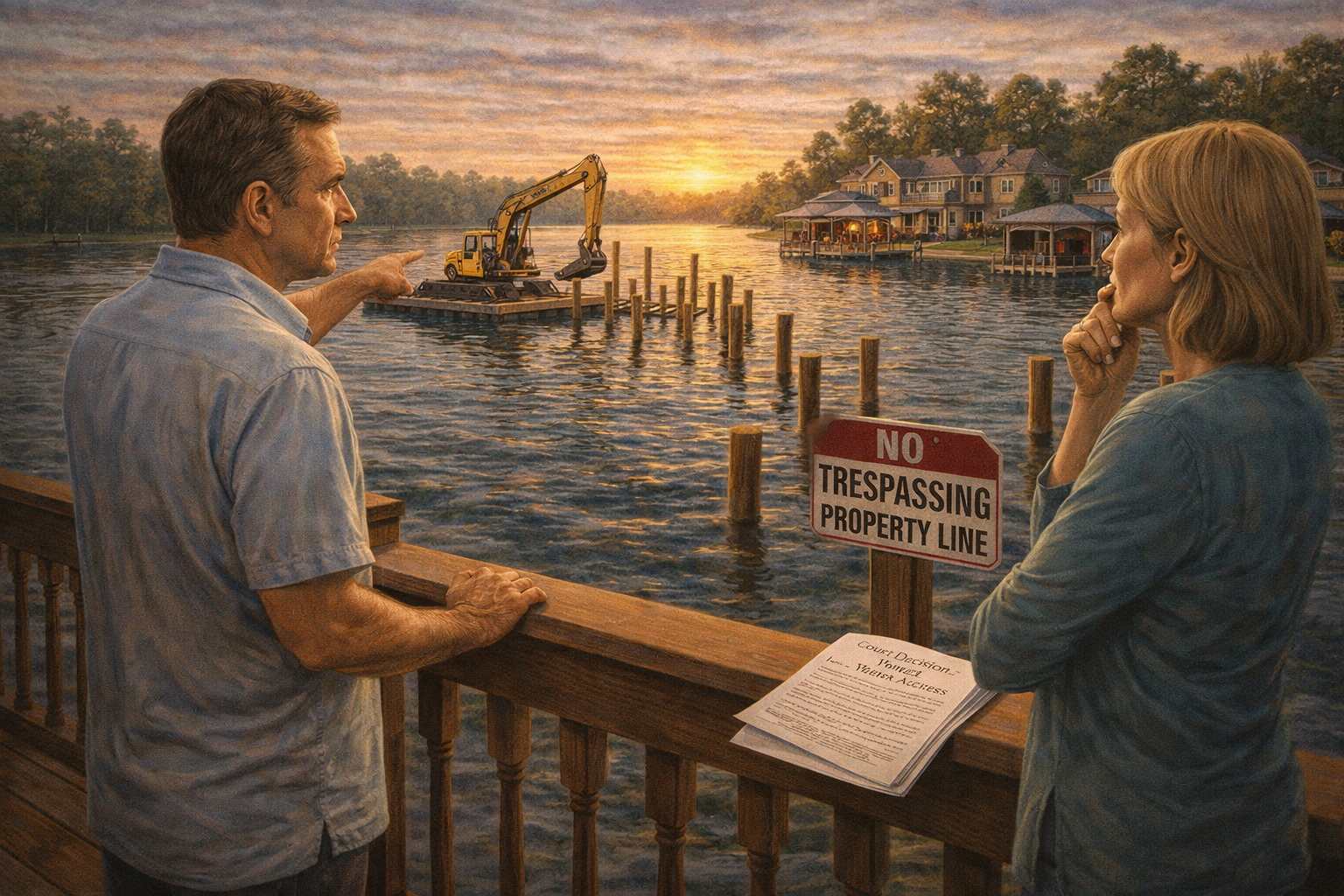
In 2011, homeowners John and Mary Smith set out to renovate their property and construct a $29,289 boat dock on a portion of submerged land identified as “Parcel B.”
To proceed, they obtained a “No Objection Statement” from the neighboring property owner at the time. However, during this process, the adjacent property was being sold and eventually transferred to new owners.
After taking ownership, the new neighbors challenged the dock’s placement, claiming it encroached on their riparian rights and obstructed their view of the lake.


The Core Issue: Who Owns the Water?
The dispute centered around one critical question:
Did the Smiths have the legal right to build on Parcel B, or did those rights belong to the neighboring property owners?
Two conflicting interpretations emerged:
-
The Smiths argued that a previous owner had reserved the rights to Parcel B and its associated riparian access.
-
The neighboring owners asserted that riparian rights naturally extend from the upland property and had never been legally separated.
This created a direct conflict between recorded deed language and claimed intent.

The Legal Framework: Interpreting the Deed
The court analyzed the dispute using established legal principles, focusing on the written deed and its interpretation.
1. The “Four Corners” Rule
The court examined the deed itself and found that while Parcel B was excluded from the property, no language addressed riparian rights.
Because the deed was clear and unambiguous, the court applied the Parol Evidence Rule, which prevents outside statements or intent from altering written agreements.
2. Ownership of Submerged Land
A critical issue emerged:
Parcel B was submerged land owned by the State of Florida, not the previous private owner.
As a result:
-
The prior owner could not legally reserve or transfer rights to Parcel B
-
Any claim to those rights was invalid
3. Impact on Neighboring Property
Expert analysis showed that the dock significantly affected the neighboring property:
-
44° obstruction from the north boundary
-
54° obstruction from the center of the property
This demonstrated a material obstruction of view, which is a key factor in riparian rights disputes.
The Court’s Decision
The court ruled in favor of the neighboring property owners, determining:
-
The dock was built within the neighbors’ riparian area
-
Riparian rights followed the upland property boundaries
-
The dock created a substantial and legally significant obstruction
As a result, the Smiths’ claim to Parcel B and associated rights was rejected.

What This Means for Property Owners
Deeds Control
Written property deeds take precedence over verbal agreements or claimed intent.
Riparian Rights Follow the Land
Waterfront rights typically remain with the upland property unless explicitly and legally separated.
State Ownership Matters
Submerged land is often owned by the state, limiting what private property owners can claim or transfer
Need Help Interpreting Property Rights?
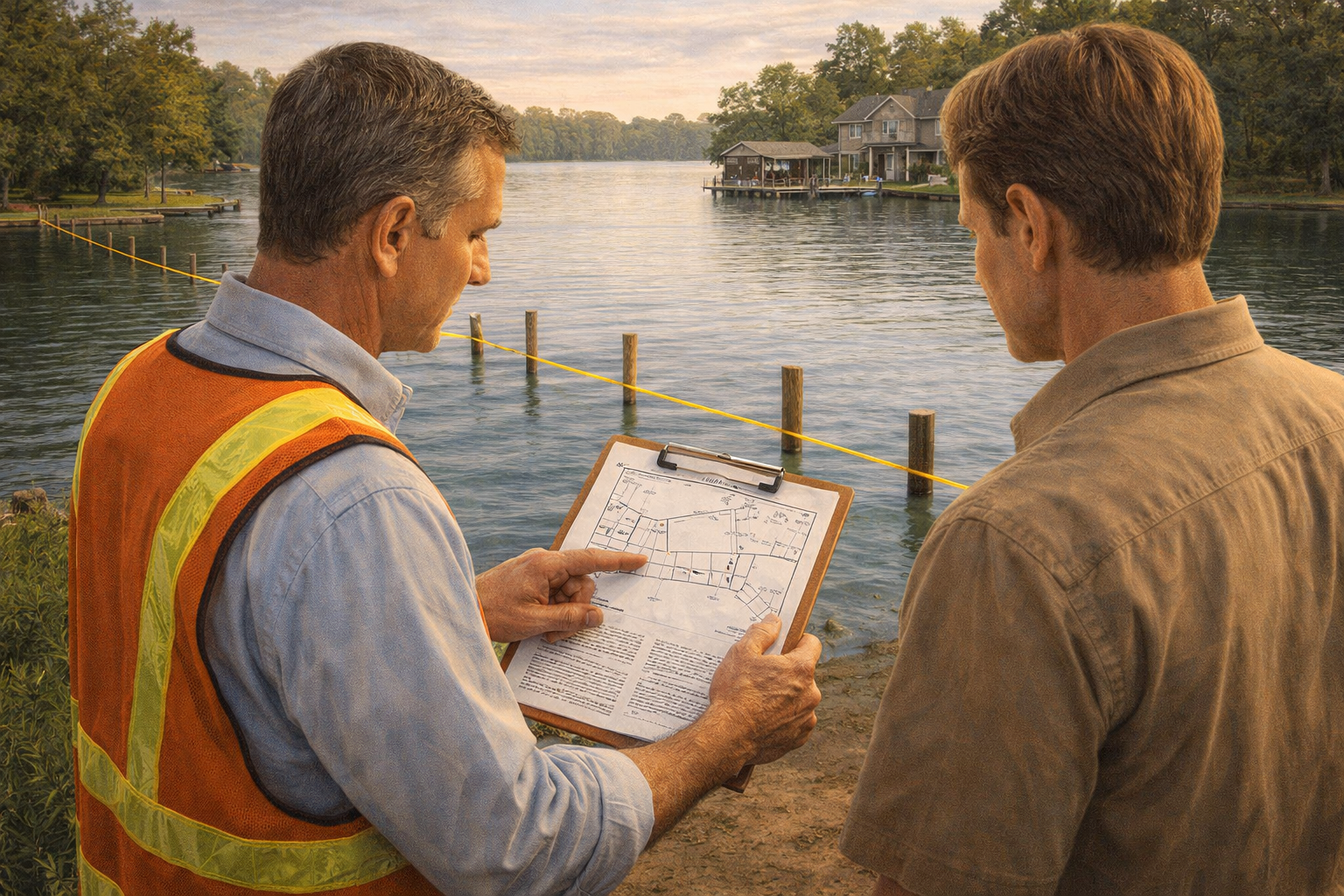
Understanding deeds, boundary rights, and legal land ownership can be complex. Our team provides expert analysis and support for disputes involving:
-
Boundary conflicts
-
Deed interpretation
-
Riparian rights
-
Legal survey review
Why Choose NLC for Land Disputes?
We Deliver:
Comprehensive survey principles applied to real-world cases
Precise field measurements and thorough documentation
Clear communication of complex data to all parties involved

If you’re seeking facts and precision in your boundary, title, or easement dispute, NLC is here to help.

Dr. Tony Nettleman
Dr. Nettleman is a land surveyor, author, educator, and expert witness.