

Answering questions about how to solve title and boundary problems, how to allocate riparian boundaries, and other property questions is part of a land surveyor’s job. But the most important thing is to be upfront and ensure that clients have a complete explanation of one question, “what is a land survey?”
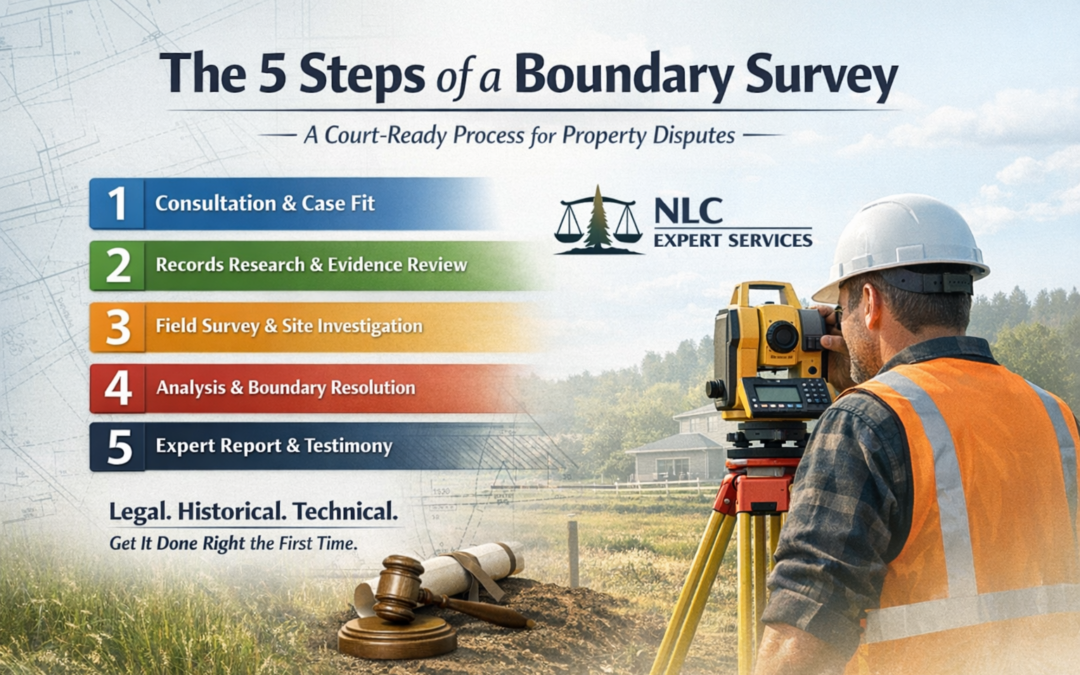
They have a broad idea, but generally clients don’t know what is required and what they receive at the end of the boundary survey. Below are the steps involved in a boundary survey that you can explain to the client.
- Establish property location
- Determine property size
- Determine property shape
- Determine property boundaries
Once this is complete, you can take all of this information and put it into a neat package for the client and hand it over so that they can see exactly what they own. Clients really want to know if there’s evidence of occupation by their neighbor like a fence if this determines legal ownership. Of course, we all know the answer, the boundary line is what determines ownership.
Occupation and legal ownership are not the same.
This is something that as a surveyor you can express to the client and clearly explain so that the client understands. The fence could be 500 feet onto their property and without determining the size, shape, and boundaries of the property, as a surveyor you can’t determine that legal ownership technically resides with the client.
Think about what you really want in your survey at the end of the day. What will help answer the client’s questions. Circling back to the list, having the size, shape, and location of the is a great place to start. But, as the surveyor ultimately you can determine what important information to give to your client at the end of the day.


0 Comments