
Construction defect litigation is technically complex. When a case involves disputed property boundaries, improper grading, encroachments, or discrepancies between what was designed and what was actually built, the attorney handling that case needs more than a good argument; they need the right expert.
Land surveyor expert witnesses occupy a specific and often underutilized role in construction defect cases. Many attorneys default to structural engineers or general contractors as their primary experts, not realizing that the root cause of the defect, and the clearest evidentiary path to proving it, runs directly through the survey work that preceded construction. This article explains when a land surveyor is the right expert to retain, what they actually do in a construction defect case, and what attorneys should evaluate before bringing one onto a case.
H2: What Construction Defects Actually Involve Surveying?
Not every construction defect case requires a land surveyor. But attorneys often miss the surveying dimension of a case until discovery is well underway, and by then the clearest physical evidence- the original survey monuments, the as-built conditions, the grading before landscaping covered it- may already be compromised.
The construction defect scenarios that most commonly involve land surveying issues include:
Grading and Drainage Errors: When land is not properly graded before or during construction, water migrates toward structures instead of away from them. When land is not graded, sifted, or leveled appropriately, it allows water to drain toward a building rather than away from it. Water often pools in parking lots and at the backs of buildings, where expensive damage may go unnoticed for years. A land surveyor can establish what the pre-construction topography looked like, what the approved grading plan required, and whether the contractor’s actual work conformed to either. That comparison, between what was specified and what was built, is the technical foundation of a grading defect claim.
Site Plan Discrepancies: Construction projects are built from approved site plans that specify setbacks, elevations, drainage patterns, and the location of improvements relative to property boundaries. When what gets built doesn’t match what was permitted, a land surveyor can document the deviation with precision. Through a land surveyor’s professional experience, they are adept at interpreting construction plans, specifications, and legal documents. By meticulously reviewing survey data and project documentation, they can identify discrepancies between proposed designs and actual construction and highlight deviations that may constitute defects.
Encroachments: When a structure, foundation, fence, retaining wall, or utility installation crosses a property line, intentionally or through error, it creates both a construction defect claim and a property rights dispute. Land surveyors use advanced technologies, such as GPS and LiDAR, to demarcate property lines accurately and resolve disputes. Their testimony in court can substantiate claims of encroachment, easement violations, or negligent land use practices.
Boundary Violations in Residential and Commercial Development: Large-scale residential and commercial developments regularly produce construction defect claims tied to boundary errors, improvements built on the wrong lot, shared walls placed incorrectly on subdivision lines, or utility easements violated during construction. These cases require a licensed surveyor who can work backward from the current conditions to the original survey data and establish precisely where the error occurred and who is responsible for it.
H2: What Does a Land Surveyor Expert Witness Actually Do?
When Tony Nettleman is retained as an expert witness in a construction defect case, the work begins long before any testimony. The expert witness role in construction defect litigation generally follows this sequence:
Records Review: The surveyor reviews the full chain of relevant documents – the original plat, the as-built survey, the approved site plan, any permits, field notes from the surveyor of record, and any subsequent survey work performed on the property. The goal is to establish what the survey record says and whether the construction that followed conformed to it.
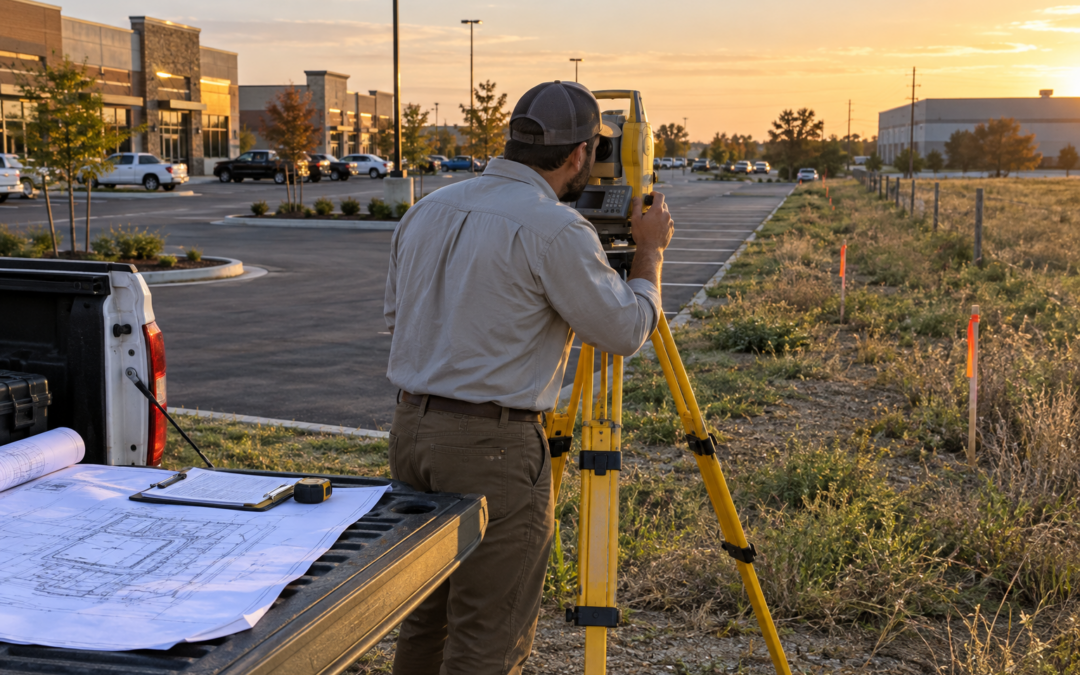
Site Inspection: In most construction defect cases, the surveyor conducts a physical inspection of the property to document current conditions. This may include taking field measurements, photographing evidence of the alleged defect, locating original survey monuments, and comparing what exists on the ground to what the records show should be there.
Expert Report: The surveyor prepares a written expert report documenting their findings, methodology, and opinions. Experts often begin their involvement by conducting investigations and preparing reports. These reports detail their findings and provide the foundation for their testimony. During the discovery phase, expert witnesses may sit for depositions, allowing opposing parties the chance to examine their conclusions. In construction defect cases where surveying is central, the expert report is frequently the most important document in the case; it translates complex technical findings into conclusions the court can act on.
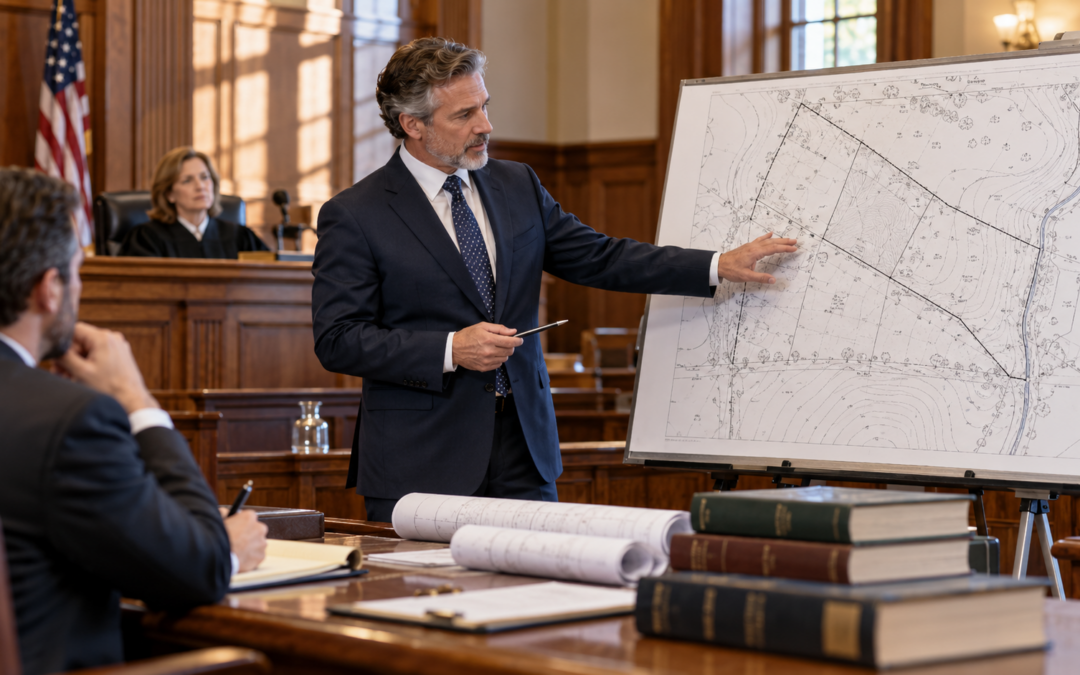
Deposition and Trial Testimony: The surveyor testifies in deposition and at trial, explaining their methodology, defending their conclusions, and responding to cross-examination. Forensic surveyors must translate highly technical findings into clear, accessible language for judges and juries. The ability to do this, to make a jury understand a grading plan or a boundary line without a technical background, is what separates a credible expert witness from a credentialed one who can’t communicate.
H2: What Makes a Land Surveyor Expert Witness Credible in Court?
Not every licensed surveyor is qualified to serve as an expert witness. Attorneys evaluating potential experts should look for several specific qualifications:
Active licensure in the relevant jurisdiction. A surveyor testifying about work performed in Texas needs to hold a Texas PLS license and understand Texas survey law. Tony Nettleman holds active Professional Land Surveyor licenses in twelve states.
Daubert-clean record. In federal court and in many state courts, expert testimony is subject to the Daubert standard; the court acts as a gatekeeper to ensure the expert’s methodology is reliable and scientifically grounded. An expert who has been excluded under Daubert in a prior case carries that history into every subsequent engagement. Tony Nettleman has never been excluded under Daubert or any comparable standard in over twenty years of expert witness practice.
Published authority in the field. Courts and opposing counsel pay close attention to an expert’s published work. Tony Nettleman is the co-author of Clark on Surveying and Boundaries, Brown’s Boundary Control and Legal Principles, and Evidence and Procedures for Boundary Location, the three primary reference texts used in land surveying litigation. When the standard of care in a construction defect case is established by reference to these texts, Tony is the person who helped write the standard.
Experience across case types. A surveyor who has only handled boundary disputes may not have the breadth of experience needed for a complex construction defect case involving grading, drainage, and site plan analysis. Ask specifically about the types of construction defect cases the expert has handled and the jurisdictions in which they have testified.
H2: When Should an Attorney Retain a Land Surveyor Expert?
The most common mistake attorneys make in construction defect cases with a surveying dimension is retaining the expert too late. By the time discovery is closing and depositions are scheduled, the window to conduct a thorough site inspection and develop a defensible methodology has often narrowed significantly.
The right time to involve a land surveyor expert is at the earliest stage of case evaluation, before filing if possible. A preliminary consultation with Tony Nettleman can tell an attorney within thirty minutes whether the case has a surveyable issue that changes the theory of liability, the damages calculation, or the identity of the responsible party.
In construction defect cases specifically, early expert involvement often reveals issues that weren’t on the attorney’s radar at intake — a grading defect that looks like a drainage problem, an encroachment that looks like a contractor dispute, or a site plan deviation that was never caught by the permit process but is now causing structural damage.
H2: Statute of Limitations Considerations
Attorneys handling construction defect cases need to be aware of how surveying-related claims interact with applicable statutes of repose. Sections 16.008, 16.009, and 16.011 of the Texas Civil Practice and Remedies Code create a 10-year statute of repose for construction defects and related claims, including those against surveyors and interior designers, although that can be extended by a further two years if notice is given to the defendant before the 10-year period elapses.
This matters for expert witness retention because the surveyor’s methodology for establishing when the defect occurred, and when it was or should have been discoverable, is often central to the repose analysis. An experienced expert witness understands how to frame their findings in terms of when the deviation from the approved plan was created, not just when the damage became visible.
CONCLUSION:
Construction defect cases are won and lost on the quality of the expert evidence. When the defect involves a surveying issue, grading, encroachment, site plan deviation, boundary error, the attorney who retains the most credible, most prepared, and most experienced land surveyor expert witness has a measurable advantage.
Tony Nettleman is available for retention on construction defect cases involving land surveying issues in Texas, Florida, and nationwide. Contact Nettleman Land Consultants at cnettleman.net for a case evaluation.
Need a Court-Ready Boundary Survey Process?
If you are already involved in a property dispute or litigation is likely, starting with a structured, expert-led process matters.
NLC Expert Services begins with a free consultation to determine fit and recommend the correct next step.
Take the Quiz to see if you need an Expert Surveyor
0 Comments