
If you have not retained a surveying expert before, the report you get back may not look like what you expected. It is not a survey with an opinion attached. It is a document built to be attacked, and its structure reflects that.
Here is what goes in one, and why each part is there.
The Federal Baseline
In federal court, Rule 26(a)(2)(B) sets the floor. A retained expert’s report has to contain a complete statement of all opinions and the basis for them, the facts and data considered, any exhibits that will be used as a summary or support, the expert’s qualifications and publications from the last ten years, a list of other cases in which they testified over the last four years, and a statement of compensation.
State rules vary, and some are considerably lighter. But the federal standard is a sensible target regardless of forum, because a report that satisfies it is a report that is hard to characterize as incomplete.
What follows is the surveying-specific content that sits inside that framework.
The Record Research
This is usually the longest section, and it is where the real work shows.
A boundary opinion is built from the documentary chain: the deeds, the plats, the conveyances, the prior surveys, the title reports. A thorough report lays out what was reviewed, where it came from, and what each document establishes. It traces the chain back to the point where the boundary was created, which in some cases means working through records a century old and written in language that no longer means what it appears to mean.
It also says what could not be found. Gaps in the record matter, and a report that silently omits them has created a vulnerability. A report that identifies a missing instrument and explains how the analysis accounts for its absence has closed that door.
The Field Evidence
What was found on the ground, where, and in what condition.
Monuments are the heart of this. An original monument set by the surveyor who created the boundary is the strongest evidence available, and locating one can resolve a dispute by itself. The report should document what monuments were recovered, how they were identified as original or subsequent, their physical condition, and their measured positions.
Occupation evidence belongs here too: fences, walls, tree lines, driveways, structures. Where people have actually behaved as though the line runs is evidence about where it runs, and in adverse possession or acquiescence cases it may be the central evidence.
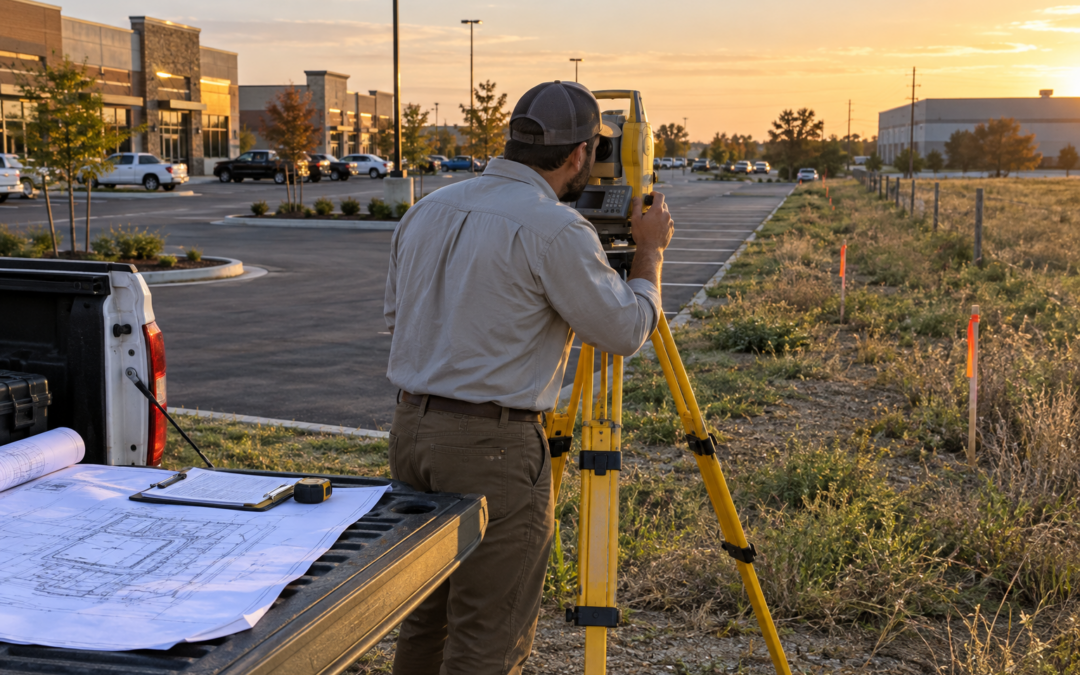
Methodology matters in this section. The equipment used, the control established, the accuracy achieved. Modern work frequently includes laser scanning or aerial imagery from unmanned aircraft, both of which produce dense, verifiable datasets that are considerably harder to dispute than a narrative description.
The Analysis
This is where the record and the field evidence are reconciled, and where the expert’s judgment is actually exercised.
The deeds say one thing. The monuments say something slightly different. The fence has been in a third place since 1974. Boundary law has a hierarchy for resolving exactly these conflicts, and the analysis section applies it, explaining which evidence controls, under what principle, and why.
A defensible analysis shows its reasoning at each step. It does not jump from evidence to conclusion. Opposing counsel will probe for the step that was skipped, and if there is not one, there is very little to attack.
The Exhibits
A boundary dispute is a spatial problem being explained to people who cannot see the property.
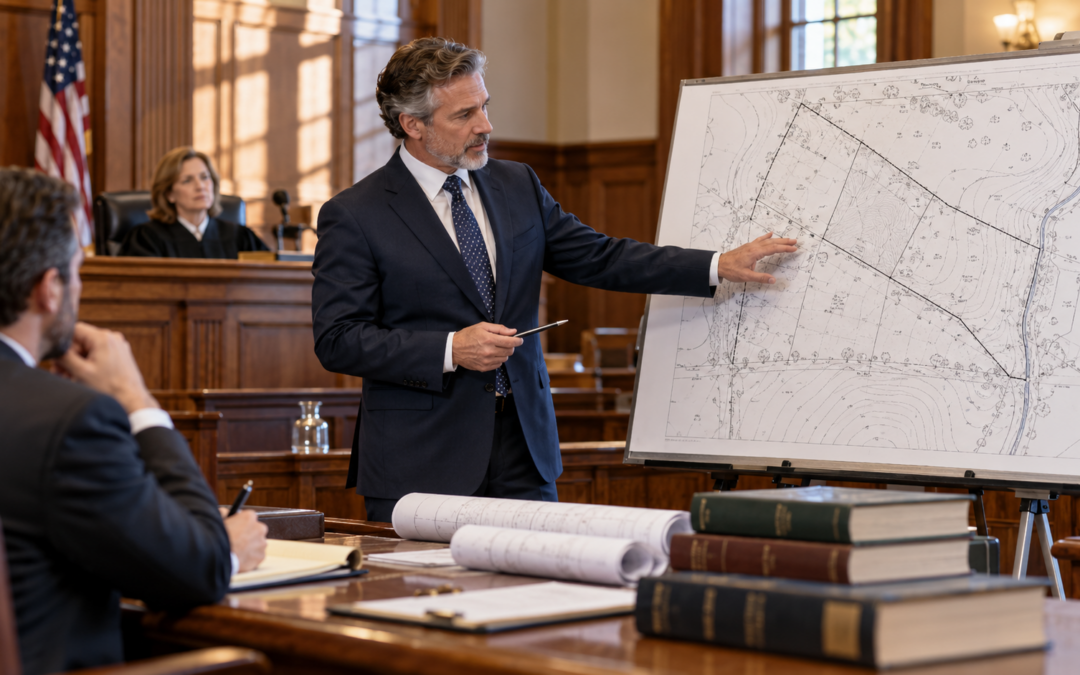
The exhibits are how that gap gets closed. A survey map showing the record boundary, the occupation line, the monuments recovered, and the disputed area. Overlays comparing the deed call to the measured position. Historical aerial photography showing the condition of the property at relevant dates. Photographs of monuments as found.
These need to be built for a courtroom, not for another surveyor. A technically perfect drawing that a jury cannot read has failed at its job. The best exhibits can be understood in about ten seconds and hold up when examined for ten minutes.
The Opinions
Stated clearly, numbered, and each tied back to the specific evidence supporting it.
The opinions should be no broader than the analysis supports. An expert who opines on legal conclusions outside their expertise has handed opposing counsel a motion. An expert who states precisely what the survey evidence establishes, and stops there, is considerably harder to move.
What Opposing Counsel Looks For
Four things, usually in this order.
Documents not reviewed. If a relevant deed, plat, or prior survey is missing from the list of materials considered, that is the first question in the deposition. Sometimes a document genuinely does not exist. Saying so in the report is much better than being asked about it later.
Methodology that cannot be repeated. If another competent surveyor could not follow the same steps and reach the same result, the opinion is vulnerable. This is the core of the Daubert inquiry and it is where thin reports fail.
Opinions that outrun the evidence. A conclusion stated more confidently than the supporting data justifies gives opposing counsel something to walk backward.
Internal inconsistency. A measurement in the narrative that does not match the exhibit. A date in one section that conflicts with another. Small errors, but they get used to suggest carelessness about the larger conclusions.
Timeline
A thorough report is not quick. Records research alone can run thirty days depending on the depth of the chain and the responsiveness of the county. Field work has to be scheduled around weather and access. Analysis and drafting follow.
If the disclosure deadline is close, say so at the outset. An expert who knows the constraint can scope the work to fit it. An expert who finds out late produces either a rushed report or a missed deadline, and both are worse.
NLC Expert Services provides written expert reports, survey maps, courtroom-ready exhibits, and attorney review sessions for boundary, easement, title, and surveyor negligence matters. Schedule a free case review.

0 Comments